Otis Environmental Authors: Amy and Dave Freeman
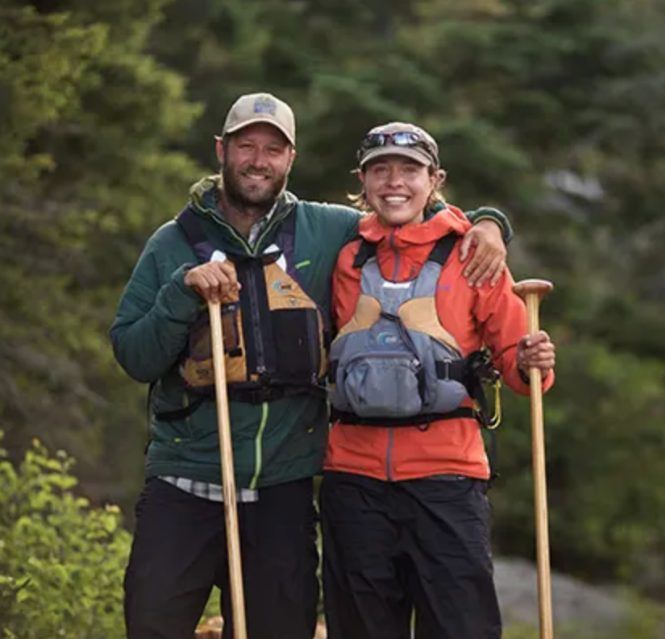
Photo: All Image credits: Unknown
Established in 1997, The Philip Otis Environmental Authors Program includes a biannual visit from an environmental author. This year’s environmental author(s) were, authors: Amy and Dave Freeman. The couple visited April 21-24 and spoke to students about their book “A Year in the Wilderness”, their exotic travels, and environmental preservation efforts.
“As kids, we both were very curious about wild places and just like spending time in nature. So…when I was young, I just was always wanting to be outdoors and curious about what was going on out there.” The pair has since traveled over 50,000 miles together across the globe, encountering some of it’s wildest places.
When I asked the two to reflect on the hardest thing about living in the boundary waters, their answer was unlikely, “It wasn't...the bugs or the cold in the middle of the winter or the fact that we were going a whole year without taking a shower. I would say after spending 3 weeks out in the wilderness, it really felt normal…It was like our normal routine. And after a couple months, anything else would have felt abnormal… So really, it was, we were happy, we were comfortable. The hardest part was not being able to see our friends and family very often… missing birthdays and holidays and things like that.”
When one is spending as much time outside as Amy and Dave were, they’re bound to notice changes in the environment due to climate change. “ I think for our time in the boundary waters, it had to do with storms…it's hard to say [if] one storm [is] caused by climate change…but just this kind of decrease in secure weather… like [it’s]really warm one day in the summertime that kind of results in… a thunderstorm [rolling] in afterwards and it's a very strong one.” The Boundary Waters weren’t the only place the two saw effects of climate change, “In other places… we were canoeing across northern Canada and we encountered a giant wildfire… as we started learning about wildfires more, we started learning about how climate change is causing wildfires to get bigger. We also were paddling down the East Coast in our kayaks, and we were stopped by a giant hurricane called Superstorm Sandy, and the eye of the hurricane actually went right over us… So we've seen quite a few… pretty concrete examples of how [climate] changes [have] an impact.”
Despite the size of the problem, there are ways that kids can help. “I think that one of the most important things that young people can do is [to get] outside and explore and learn about the natural world, because we're only going to protect the things that we love, and we love the things that we know.
So part of stewardship is getting to know and love the natural world. So that's a really important step. But there's also a lot that we can do as individuals. You know, the foods that we eat… Like producing the amount of meat, the amount of beef that we eat has a really important impact on the climate and the natural world. Things like training off lights and reducing the amount of energy we consume, making sure that we're recycling and… keeping waste out of the environment is really important.”
Amy and Dave also wrote a book about their adventures throughout North America. The book is entitled North American Odyssey: 12,000 Miles Across the Continent by Kayak, Canoe, and Dogsled. In the book, they reflect on all their experiences traveling across the continent, the various uses of transportation that helped them, and their undenying passion for nature. Originally they didn’t have the idea to create a book at all.
“When we began the journey, we had this intention of sharing the experience with as many people as we could. And we had thought of several things… Like posting on social media and sharing photos and video clips and even recording a podcast that would play on the local radio station. and inviting reporters to come and interview us and stuff like that. But we didn't think of writing a book. It took us being in the boundary waters…
It was probably as we were about halfway through. Like it was kind of later in the winter that we thought, no, we could do that. We could write a book because we wanted to have another vehicle for sharing.
We figured we could reach even more people about…hearing why the boundary waters is so special and why we want to protect it.”